

I was recently killing time in a coffee shop in Al Olaya, Riyadh, when I noticed something that made me rethink my entire career in marketing. A group of teenagers were sitting directly beneath a massive, million-riyal digital billboard, but not one of them looked up. They were hunched over their phones, mesmerized by 15-second clips. In that moment, it was obvious: the “prestige” of the old-school, big-budget Middle Eastern TV spot hasn’t just faded—it has been evicted. If you’re a brand manager in Dubai still waiting six months for a “hero” video to clear a committee, you aren’t just late. You’re invisible.
We are currently in the middle of a total gutting and reconstruction of how brands speak to people in the Gulf. This isn’t some futuristic “what if” we discuss at Gitex. AI-based video is becoming the primary language of commerce here. But it’s not because we’ve fallen in love with algorithms; it’s because the GCC is a hyper-speed, mobile-first, and intensely proud culture that demands a level of personalization that human film crews simply cannot scale without losing their minds.
The Speed of Culture vs. The Slowness of Production
In the GCC, trends don’t just move; they sprint. A joke on Snapchat or a specific “vibe” in a boutique Jeddah café can become the dominant cultural currency across the region in forty-eight hours. Traditional production houses, with their two-week lead times, heavy equipment rentals, and mountain-high invoices, are like trying to catch a Ferrari while riding a bicycle.
This is where AI-based video has claimed its first real win: pure, unadulterated velocity. When a brand can spot a trending topic at 9:00 AM and have a high-quality video ad live by lunch, they aren’t just “advertising.” They’re joining the chat. In markets like the UAE and Qatar, where digital penetration is essentially 100%, being late to a trend is the same as being silent. AI has turned video from a “precious asset” to be guarded into a “fluid conversation” to be shared.
Hyper-Localization: Moving Beyond the “Subtitle” Era
For years, global brands treated the GCC like a monolith. They’d take an asset shot in London, slap on some Arabic subtitles—usually in a default font that looked like an afterthought—and wonder why it flopped. It was lazy, and the modern Khaleeji consumer sees right through it.
People here are sophisticated and fiercely protective of their specific local identity. An ad that hits in Riyadh might feel totally alien in Kuwait City because the dialect, the visual cues, and the social nuances are world’s apart. AI-based video tools now allow for hyper-localization at a scale that used to be a budgetary nightmare.
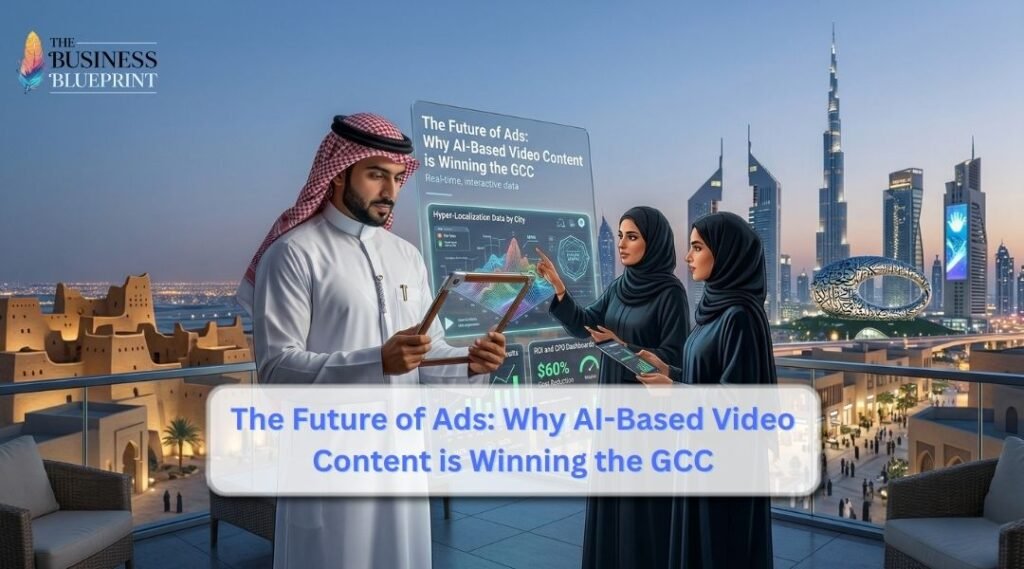
Imagine a single campaign where the background architecture, the traditional dress (the specific drape of a ghutra or the embroidery on an abaya), and the spoken dialect are automatically adjusted based on the viewer’s GPS coordinates. We’re talking about “synthetic” local relevance. It lets a brand be a local hero in every city simultaneously without flying production crews across the desert for a month.
The Death of the “Skip” Button
Let’s be honest: we’ve all become professional ad-dodgers. The moment those five seconds are up on YouTube, our thumbs are ready to strike. However, AI-driven video is winning because it’s learning how to make us forget we’re watching an ad.
By utilizing predictive algorithms, AI doesn’t just “make” the video; it optimizes the “hook.” It knows that a viewer in Muscat might respond better to a certain color palette or a specific opening beat than someone in Manama. These ads are being built in real-time to match the emotional state and scrolling habits of the user. When content feels this tailored, the “skip” button loses its power. It’s no longer an intrusion; it’s a recommendation that actually fits the vibe.
The Influencer Paradox and Virtual Talent
The GCC has been the global capital for influencer marketing for a decade. But we’ve hit a ceiling. Real-life influencers are expensive, their schedules are a nightmare, and—let’s face it—audience fatigue is real. Enter the AI-generated virtual influencer.
While some might find the idea “uncanny,” the data suggests otherwise. Virtual entities are starting to dominate fashion and tech spaces in Dubai. They offer brands total creative control and 24/7 availability. More importantly, they can be “programmed” to embody the exact values and aesthetic a brand needs. In a region that prizes “The New” and “The Future,” these digital-first personalities are seen less as fakes and more as the next frontier of entertainment.
Efficiency is the New ROI
From a business perspective, the math is just brutal. The cost of producing a traditional high-end video ad in this region can range from $20,000 to $200,000. AI-based pipelines can slash those costs by 70% while increasing output tenfold.
In the high-stakes economies of the GCC, where “Vision 2030” and “D33” are driving massive digital transformation, marketing departments are under pressure to do more with less. AI isn’t just a shiny toy for the creative team; it’s a vital tool for the CFO. It allows for relentless A/B testing. Instead of betting the whole budget on one “hero” video, brands launch fifty variations and let the audience’s engagement decide which one lives. It’s Darwinism for the digital age.
The Trust Factor: Why Humans Still Hold the Keys
Does this mean we’re firing the directors and copywriters? Only the ones who refuse to evolve. The GCC is a region built on relationships and “majlis” culture—personal connection is everything. The brands winning with AI are those that use it to handle the “heavy lifting” while keeping a human hand on the steering wheel.
A machine can generate a beautiful sunset over the Burj Khalifa, but it doesn’t understand the “soul” of a National Day celebration or the quiet, heavy reverence of a Ramadan evening. The most successful AI-based video content in the Gulf today is “AI-powered, but human-led.” It’s a partnership where the tech provides the scale, and the local marketer provides the heart.
Looking Ahead: The New Standard
I don’t think “AI-based” will even be a term in two years—it will just be how video is made. The GCC isn’t just adopting this technology; we are perfecting it. With massive investments in AI infrastructure and a population that embraces the “next big thing” with open arms, the Gulf is no longer following global advertising trends. We are setting them.
If you’re still looking at AI as a “threat” to your creative process, you’re missing the point. It’s the ultimate canvas. The question for brands in the region is no longer if they should integrate AI into their video strategy, but how quickly they can do it before the “skip” button becomes their only legacy.
FAQs
Does AI video actually look “real” enough for us in the GCC? Honestly, on a mobile screen—where 90% of our content is consumed—you can’t tell the difference anymore. The lighting and textures are now at a cinematic level that passes the “eye test” easily.
Will this put my favorite local influencers out of work? Unlikely. Think of it as an evolution. You’ll see “hybrid” influencers—real people using AI to scale—alongside virtual avatars built for 24/7 brand representation.
How do we make sure AI doesn’t mess up our cultural traditions? By not leaving it to the machine. AI is a tool, not a brain. You still need local creative directors to set the “cultural guardrails” for things like dress, gestures, and social etiquette.
How much cheaper are we talking for social media campaigns? We’re seeing production costs drop by 60% to 80%. But the real value is in the speed—you can go from an idea to a live ad in hours, not weeks.
Which platforms are the best for these AI ads in the Gulf? TikTok is the king of engagement, but Snapchat is still the heavy hitter for sheer reach in Saudi Arabia, especially for those localized AI filters and lenses.
Do people in the Middle East trust AI-generated content? We are some of the most tech-forward people on the planet. As long as the brand is authentic and the content is good, our audiences generally reward the innovation.
Can I start doing this for my small business today? Yes. You don’t need a massive agency budget. Tools like Sora or even the AI features inside CapCut let small boutiques produce “big brand” quality video on a shoestring.
Meta Tag: Discover why AI-based video is dominating GCC advertising in 2026. From Riyadh’s hyper-localization to Dubai’s massive ROI, see how AI is rewriting the rules for brands.